Corporate training: how companies structure learning, communication, and knowledge scaling.
Companies across various sectors today face a common challenge: how to communicate knowledge clearly, consistently, and scalably in increasingly distributed, digital, and dynamic environments. Training, onboarding, technical updates, and cultural alignment processes have ceased to be one-off events and now require continuous learning structures.
In this context, corporate educational content has evolved. It's not just about transmitting information, but about organizing knowledge, transforming strategies into understandable messages, and ensuring that employees, partners, or sales teams can apply this learning in their daily work.
It is in this context that solutions based on audiovisual media, instructional design, and multiple learning formats gain relevance, not as isolated pieces, but as part of a structured educational ecosystem.
Real challenges for companies
Before discussing solutions, it's important to understand the problems that typically lead organizations to seek this type of approach. Among the most recurring challenges are:
- Low knowledge retention in traditional or overly theoretical training.
- Difficulty in standardizing communication in companies with multiple units or large operational scale.
- Slow and inconsistent onboarding, dependent on specific people or scattered materials.
- Outdated internal content, content that is not easily reusable, or content that is disconnected from the business strategy.
- Lack of engagement on LMS platforms, resulting in high abandonment rates.
- Excessive use of static presentations, without adaptation to different audiences and contexts.
These problems are not only related to form, but also to the absence of a structured approach to educational content that considers the audience, objective, format, and context of use.

Modern approaches to corporate educational content
The new approach to corporate education rests on an important conceptual pillar:
"Content as a system, not as an isolated piece."
Instead of creating one-off materials, more mature companies treat content as a strategic asset, designed to be reused, updated, and adapted to different moments in the employee journey. Combining multiple formats and interoperability, the same content can exist as:
- Educational video
- SCORM Module for LMS
- PowerPoint presentation
- Supporting material or infographic
- Educational game or interactive experience
This approach allows for broader reach and impact without multiplying efforts. Some modern solutions are already designed for LMS, LXP, and learning paths, respecting standards such as SCORM and facilitating measurement, monitoring, and continuous updating. This, combined with well-constructed narratives, helps contextualize concepts, reduce abstraction, and increase retention. In the corporate environment, storytelling is not entertainment, but a cognitive tool to facilitate understanding and practical application.
How do these solutions work in practice?
In practice, these approaches materialize in different corporate contexts. Let's look at some of them:
- Continuous training and qualification
Structured audiovisual content allows for:
- Standardize technical and behavioral training.
- Reduce dependence on in-person instructors.
- Quickly update processes and guidelines.
When integrated into an LMS, these materials become part of evolutionary paths, tracking the employee's development over time.
- Onboarding new employees
Video-based onboarding programs, support materials, and experiences such as interactive video lessons help to:
- Accelerate adaptation
- Ensure cultural alignment.
- Reduce communication noise.
- To make the experience more predictable and scalable.
This type of structure is especially relevant in companies with rapid growth or high turnover.
- Internal communication and educational campaigns
In addition to formal training, educational content is also used for:
- Organizational change communication
- Launching new processes or products
- Internal engagement and compliance campaigns
When well-planned, these materials prevent rework and reinforce key messages over time.

The role of specialized structures
For these solutions to work consistently, it is common for companies to turn to specialized structures in educational and audiovisual content, capable of integrating different skills.
It is in this context that it operates. Take 5 Films, Group area Take 5 Responsible for creating training content and learning experiences. The role is not limited to video production, but involves a broader approach to applied corporate education. In short, this type of structure combines:
- Educational and institutional audiovisual production
- Instructional design oriented towards learning objectives.
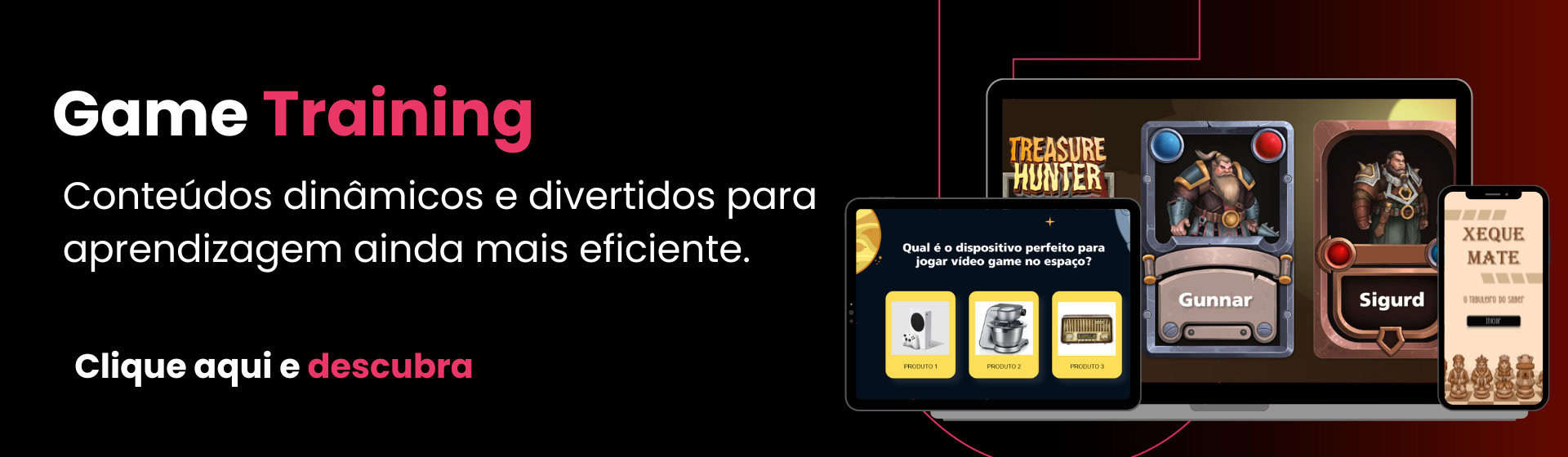
- Development of interactive content and educational games.
- Technical preparation for LMS, LXP, and learning paths.
- Adapting materials to the visual identity and tone of voice of companies.
The logic is to act as a content partner, supporting organizations in the transformation and distribution of knowledge, always considering the audience, context, and practical use. This approach also allows for:
- Creating standardized content for large operations
- Scaling up training without sacrificing quality.
- Optimize time and resources when producing multiple formats from the same strategy.
Conclusion
The increasing complexity of corporate environments demands that communication and learning be approached with method, clarity, and a long-term vision. Well-structured educational content is not merely support material, but a knowledge infrastructure that underpins decisions, behaviors, and organizational culture.
By understanding how audiovisual, multi-format solutions integrated with learning platforms work in practice, companies can make more informed decisions about how to develop people, align messages, and preserve strategic knowledge.
Specialized teams, such as Take 5 The films illustrate how the integration of audiovisual media, corporate education, and instructional design can support this process in a technical and consistent manner, always focusing on clarity, applicability, and scalability, and not on promotional communication.